
AIX 2026: Aircraft data goes live as Teledyne pushes real-time intelligence
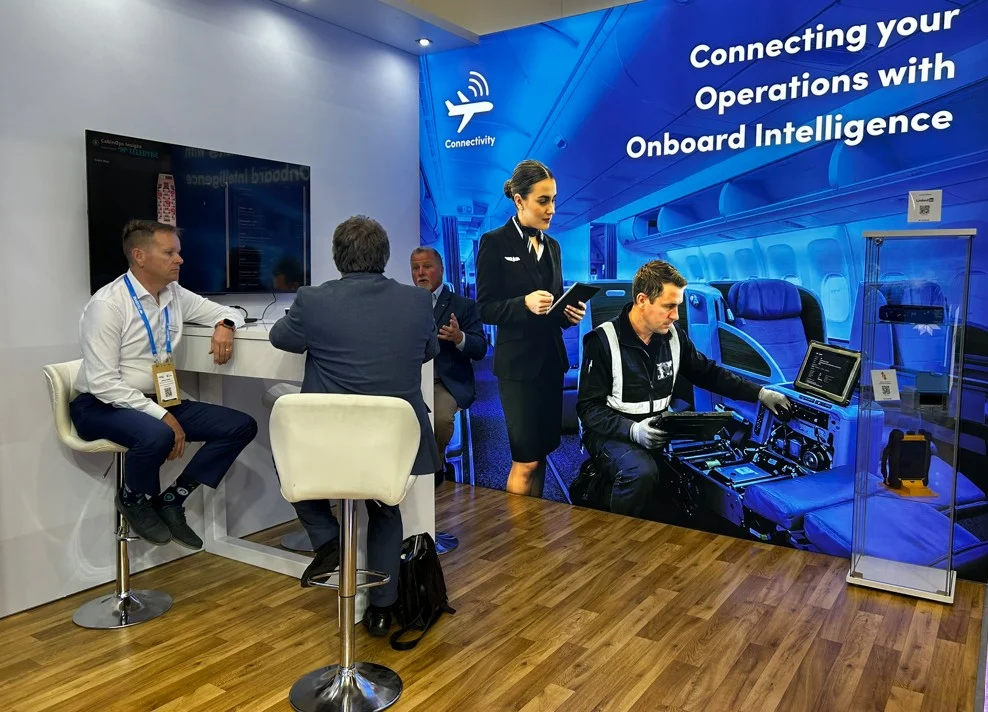

Teledyne is aiming to move airlines beyond passive data collection and into real-time onboard decision-making with a new edge computing platform designed to turn aircraft into “intelligent ecosystems”.
Speaking at AIX, company executives said the industry has reached a tipping point: while airlines have spent decades gathering aircraft data, much of it is still analysed after the fact rather than acted on in the moment.
“Airlines have been great at capturing data for years,” said Bobby Burkett, Data Specialist at Teledyne Controls. “The challenge now is how to get immediate intelligence from it, instead of looking at it historically.”
While avionics systems have long formed part of a connected ecosystem, Teledyne sees significant untapped potential in the cabin, where an increasing number of “smart” components are now generating data.
Seats, galley equipment and other cabin systems can already produce diagnostics, but in many cases that information is neither aggregated nor used in real time. The company’s platform is designed to change that by bringing everything into a single onboard environment capable of processing data and triggering actions during flight.
“This is taking it beyond dashboards,” said Jim Jackson, Business Development VP at the company. “Instead of someone reviewing a fault later, the system can identify an issue as it develops and act on it.”
That could include automatically resetting a malfunctioning premium seat or alerting crew to issues affecting high-value passengers before they escalate.
A major focus is retrofit, with Teledyne emphasising wireless connectivity as key to adoption. Rather than requiring extensive rewiring, the platform can ingest data via Wi-Fi, low-power Bluetooth and other wireless technologies, even from legacy systems.
For example, existing seat data outputs can be captured using small wireless transmitters, avoiding the need to take aircraft out of service for major modifications.
“No airline wants to ground an aircraft just to run wires,” Burkett said. “It’s about maintaining availability while still unlocking the data.”
READ: flydocs strengthens its product and innovation team
The same approach could extend to safety equipment and other assets, with long-life sensors enabling continuous monitoring without heavy installation overhead.
From monolithic systems to app-style architecture
The platform also reflects a broader shift in avionics thinking. Instead of traditional monolithic systems that require supplier-led updates and recertification, Teledyne is offering a containerised architecture that allows airlines to develop and deploy their own applications.
Using an approach likened to a smartphone ecosystem, airlines can build software tailored to their operations and update it rapidly, without lengthy certification cycles for every change.
“We’re offering a platform where airlines can control their own destiny,” Jackson said. “They don’t have to come back to the supplier every time they want something new.”
Beyond the cabin, the system is designed to integrate data from across the aircraft, linking avionics, environmental controls and other systems to provide a more complete, contextual picture.
By combining these data streams with phase-of-flight information, the platform can identify relationships between systems that would previously have required manual analysis.
“It’s about stitching together the full story in real time,” Jackson said.
Teledyne argues the industry’s focus must now shift away from simply generating more data.
“There’s more data available than ever,” Burkett said. “But that doesn’t mean it’s actually smart.”
Instead, the emphasis is moving toward platforms capable of turning data into actionable insight at the edge—particularly as airlines look to improve operational reliability, reduce maintenance burden and protect revenue from premium cabin disruptions.
With retrofit opportunities across large legacy fleets, Teledyne believes the appetite for such solutions will continue to grow as airlines look to extract more value from the systems already onboard.