
Why 2026 could be a pivotal year for Emirates SkyCargo
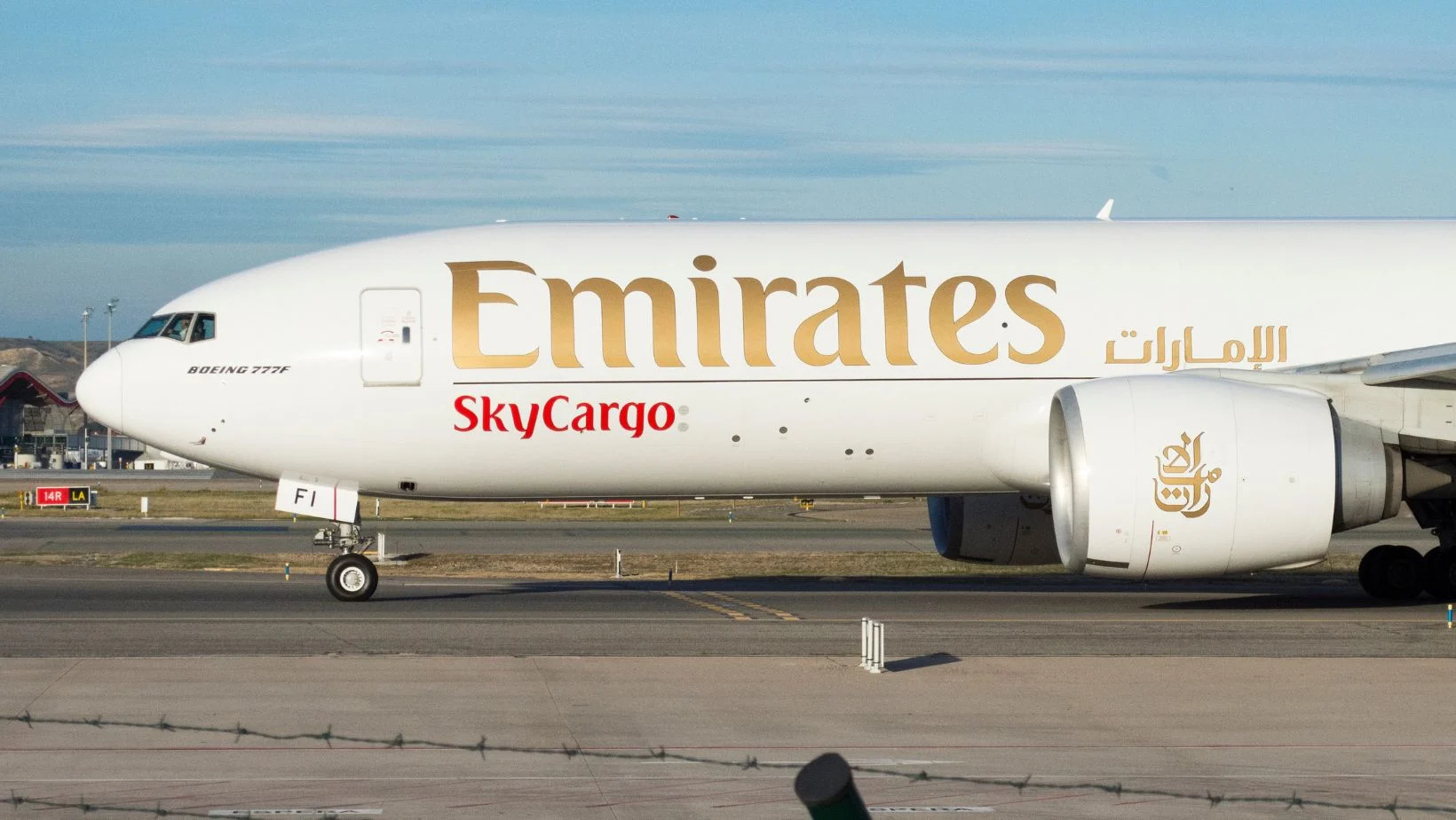
After reinforcing its fleet, network and digital foundations in 2025, Air Cargo Management’s Craig Waters finds out that Emirates SkyCargo is poised to scale capacity and sharpen its competitive edge.
In an air cargo market still recalibrating after several years of turbulence, Emirates SkyCargo ended 2025 in a notably different position from many of its peers.
Rather than responding reactively to shifting demand patterns, the carrier has spent the past 12 months methodically strengthening the pillars that will define its next phase of growth: fleet, network reach, operational resilience, digital maturity and product depth.
As the cargo division of the world’s largest international airline, scale has always been a defining characteristic of Emirates SkyCargo. What stands out in 2025, however, is how deliberately that scale has been shaped.
Investment decisions made over the past year suggest a business moving beyond short-term capacity management and towards a longer-term model built around flexibility, reliability and vertical specialisation.
That strategic intent is articulated clearly in a recent press release by Badr Abbas, divisional senior vice president at Emirates SkyCargo: “In 2025, we built the runway for what comes next. We strengthened the core pillars of our business by expanding our network and innovating with our product portfolio and operations to deliver what our customers need today – and tomorrow.
“2026 is set to be a pivotal year for our fleet expansion, with the expected delivery of up to 10 Boeing 777Fs by December, fuelling our next era of growth.
“This influx of capacity unlocks opportunities for network and scheduling expansions, offer more flexibility to scale our solutions and enable us to deliver even greater value across our global network.”
Fleet investment as a growth multiplier
Fleet strategy sits at the heart of that “runway”. During 2025, Emirates SkyCargo took delivery of additional Boeing 777 freighters, allowing it to retire older aircraft while maintaining one of the youngest cargo fleets in the market.
At year end, the airline operated 11 owned 777Fs, supported by five wet-leased 747s, a combination that has allowed it to balance long-haul trunk routes with tactical capacity deployment.
Importantly, fleet expansion is not being treated as an end in itself. The induction of further 777Fs in 2026 – alongside the first Emirates passenger aircraft entering the conversion programme – is intended to unlock operational flexibility rather than simply add uplift.
By the end of next year, Emirates SkyCargo aims to operate at least 21 freighters, a scale that materially changes what the airline can offer in terms of frequency, routing options and schedule resilience.
In an environment where shippers increasingly prioritise predictability over peak capacity, that flexibility becomes a competitive differentiator. It also positions Emirates SkyCargo to respond quickly as trade lanes shift, whether driven by geopolitical realignment, near-shoring strategies or evolving manufacturing centres in Asia and Africa.
Network expansion with a clear rationale
That same measured approach is evident in the carrier’s network development. In 2025, Emirates SkyCargo launched freighter services to eight new destinations, including Copenhagen, Narita, Bangkok, Mumbai and Hanoi, while reinforcing established high-volume markets such as Guangzhou, Shanghai and Johannesburg with additional frequencies.
The decision to rapidly scale Hanoi to a four-weekly service is instructive. Rather than treating network expansion as a static exercise, Emirates SkyCargo is clearly monitoring demand signals and adjusting capacity accordingly.
By year end, the freighter network reached 42 destinations across six continents, supported by the bellyhold capacity of Emirates’ vast passenger network.
Beyond its own metal, interline partnerships continue to play a critical role. New agreements signed in 2025 with Astral Aviation and Teleport extend Emirates SkyCargo’s reach into secondary and tertiary markets in Africa and Southeast Asia, regions where trade volumes are growing but infrastructure remains uneven.
These sit alongside established partnerships with carriers such as Air Canada, United and Virgin Atlantic, reinforcing the airline’s ability to offer global coverage without overextending its own fleet.
Preparing operations for the next decade
While much attention is focused on aircraft and routes, Emirates SkyCargo’s operational investments suggest a longer view still. As plans progress for a next-generation cargo facility at Al Maktoum International Airport, the airline has continued to invest heavily in its existing infrastructure to ensure performance is not compromised during the transition period.
Upgrades to the on-road fleet, including the introduction of Euro 6 and hydrogen-powered trucks, point to a gradual shift towards lower-emission ground operations. While these steps may appear incremental, they reflect a broader effort to modernise landside logistics in parallel with airside growth – an area that often becomes a bottleneck as volumes scale.
At the same time, Emirates SkyCargo is exploring new delivery models, including the feasibility of VTOL aircraft for first- and last-mile operations. While still at an exploratory stage, such initiatives underline a willingness to test emerging technologies that could reshape cargo distribution in dense urban environments over the longer term.
Digital momentum gathering pace
Digitalisation remains one of the most tangible shifts in the business. By December 2025, nearly 80% of all shipments were booked digitally, driven primarily by eSkyCargo, API integrations and third-party marketplaces. This steady migration away from manual processes has implications beyond efficiency; it enables better data visibility, faster decision-making and a more consistent customer experience.
The adoption of instant payment solutions, replacing traditional cash-based transactions, further reflects a push to remove friction from the booking and execution process.
Looking into 2026, Emirates SkyCargo has signalled further enhancements to its digital “toolbelt”, with a focus on refining the customer journey rather than simply adding functionality.
Products moving from niche to scale
Perhaps the clearest indicator of maturity is how Emirates SkyCargo’s specialised products are evolving. Courier Express, launched in 2025, has already expanded into markets such as Australia and Germany, delivering more than 50,000 packages with an average delivery time of three days across the network. What began as a differentiated offering is now being positioned as a scalable solution, with further launches planned into major economies during 2026.
Similarly, the Aerospace and Engineering vertical is benefiting from rising demand for AOG support and engine movements, recording a 100% increase in individual engine shipments year on year.
Growth in core verticals such as Fresh and Vital reinforces the airline’s strength in time- and temperature-critical logistics, while Secure continues to see strong demand driven by electronics manufacturing in Vietnam and India.
From foundation to execution
Taken together, Emirates SkyCargo’s 2025 performance reads less like a year of headline-grabbing announcements and more like one of disciplined groundwork. Fleet orders, network decisions, digital investments and product launches all point towards a business preparing for sustained growth rather than short-term gains.
The challenge for 2026 will be execution at scale. Doubling capacity, adding 20 new freighter destinations and continuing to innovate digitally will require careful coordination across operations, partnerships and infrastructure.
Yet with much of the foundation now in place, Emirates SkyCargo enters the year not chasing momentum, but shaping it.
