Low Cost June / July 2026
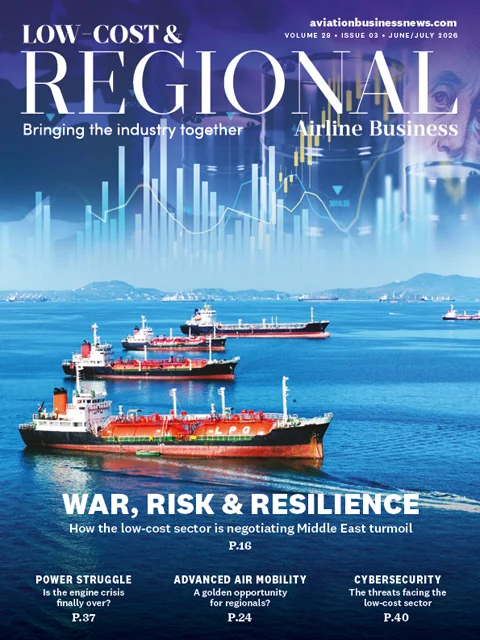
The conventional wisdom about low-cost carriers has always been reassuringly simple: when the macro environment turns hostile, they benefit. Passengers downgrade from full-service, discretionary spend migrates to budget options and the lean cost base insulates margins from the worst of the storm. It is a narrative the sector has nurtured, and, to be fair, one that history has generally supported.
But the conditions bearing down on European aviation this summer are sufficiently unusual that the old certainties deserve scrutiny. The effective closure of the Strait of Hormuz has sent jet fuel prices to levels not seen since the post-Covid spike, and the simultaneous pressure of US trade tariffs, inflating parts costs, suppressing consumer confidence and clouding the GDP outlook, has created a compound stress that the low-cost model has not previously had to absorb at this scale.
The divergence now visible within the sector is instructive. Ryanair, with around 80% of its 2026 fuel requirement hedged, is well-positioned to ride out the spike, while easyJet, hedged at approximately 70%, has moved to reassure passengers by ruling out surcharges on pre-booked flights.
Wizz Air, by contrast, enters the summer with hedging coverage of around 55% and a financial warning already issued in March: a stark illustration of how unevenly the same external shock distributes itself across carriers.