
Meet The Mechanics: An interview with Yi Liqun, ExecuJet Haite
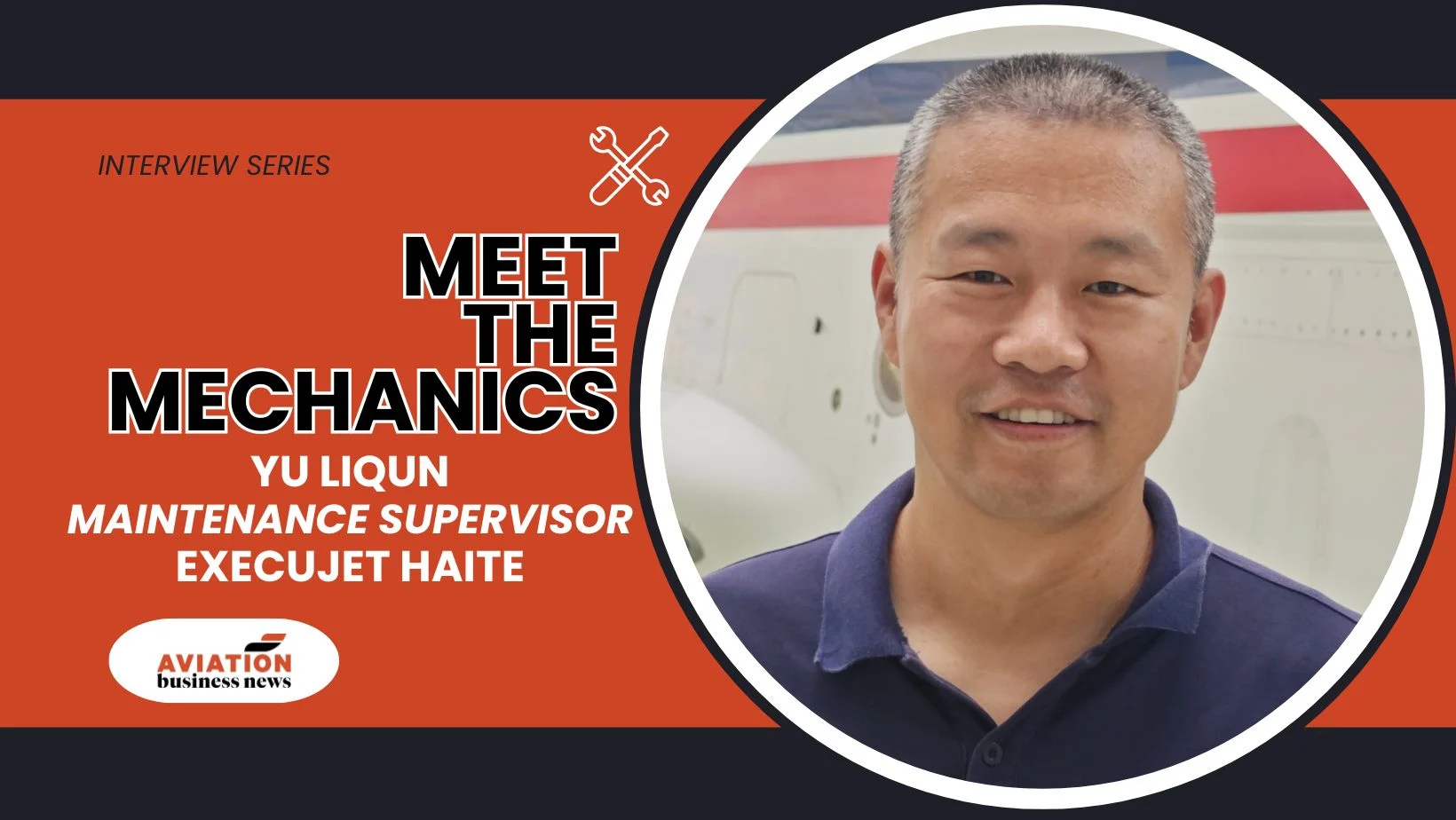
In the next instalment of our ‘Meet the Mechanics’ interview series – created to shine a light on the hands-on professionals who keep aircraft in top condition – we feature Yi Liqun of ExecuJet Haite who shares his journey from campus job fairs to business jet maintenance, reflects on the challenges of complex interior checks, and explains why safety, precision and a passion for aircraft keep him motivated every day.
How did you get into aviation maintenance, and what inspired your career path?
In 2004, when I finished university, I was lucky to learn about aircraft maintenance through a campus job fair. An aviation maintenance company had a booth that caught my eye. I became interested in this field because it’s technical and has a strict culture. It felt like a good fit for me since I like dealing with technical challenges. I then applied, passed through their selection process, and that’s how I started my career in aviation.
Back in 2011, China’s business aviation sector was growing fast. Before that, I had only worked on maintaining commercial airliners. Business aviation interested me because of its advanced avionics, high-performance airframe systems, and custom cabin setups – they really show top-level engineering and require careful work. I wanted to learn more about advanced maintenance techniques and complex integrated systems, so I moved into business jet maintenance. This change helped me to improve my technical skills and made me even more passionate about my job.
Can you walk us through a typical day or shift in your role?
My job has a lot of different tasks, and it’s not always easy. Every day, I do regular checks on planes; we call these scheduled checks. That is the most basic part of my work, and I perform a lot of maintenance scheduled tasks. I also must handle sudden Aircraft on Ground (AOG) problems. When that happens, I usually travel to other cities to find out what’s wrong with the aircraft, performing advanced troubleshooting. Besides that, the company has also trained me in performing engine borescope checks, which happens to be one of my specialties.
Let me tell you about a normal day using scheduled checks as an example. When it comes to scheduled checks, I’ve become quite skilled at interior work. Each workday, the first thing I do is count my tools. ‘Three tool counts’ is a strict rule in our field, and it is a habit I have developed after all these years. Before starting my work, I ensure I have all my tools. I count while I’m working to stop tools from being left on the plane – which could be very dangerous. And I count again when I finish to make sure I have the same number of tools as when I started.
This interview continues after the below picture…
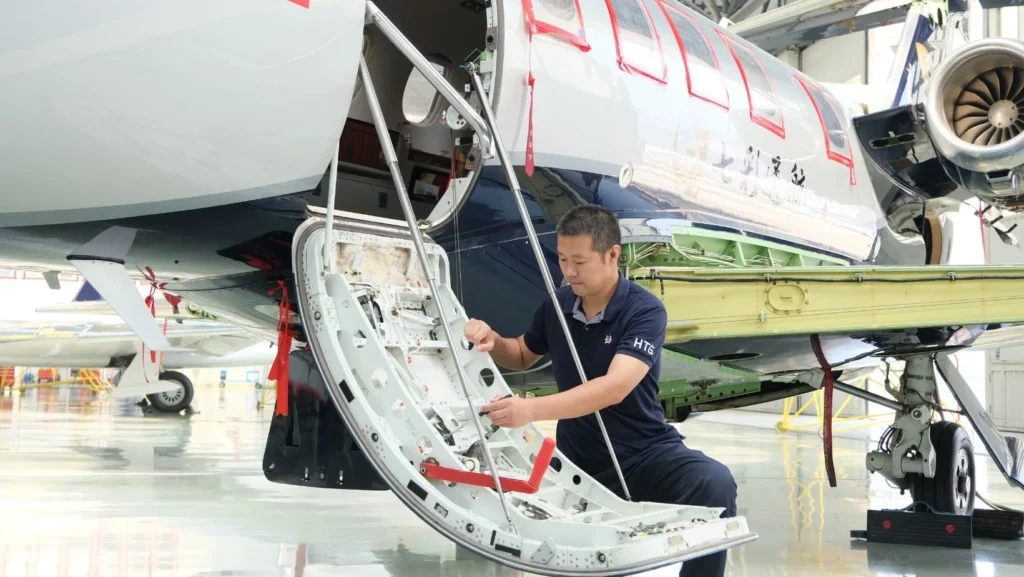
For large scheduled checks, we need to remove all the inside parts of the plane, and it’s a big job. The galley, bathroom, wardrobe, seats, floor and ceiling, none of these can be forgotten. Let’s take removing the galley as an example. First, I need to pack up all the loose items in the galley one by one. For things like cups and plates, I wrap each one carefully with pearl cotton. Then I put them gently into a box and arrange them neatly, so they don’t get broken when they are being moved or stored. After emptying the galley, we move on to taking it apart. The galley is made up of many parts, such as drawers, trash cans, work surfaces, water tanks, taps and lights. Each part has a specific order in which it was installed. What’s more, most of the screws are hidden. It’s not easy to find where they are exactly. A lot of the time, you need experience and to look carefully.
I wrap all the parts I have taken apart again with special cotton to protect them while stored and tag them with the aircraft information. I’m always worried about scratching or hitting the paint on the inside. After that, these parts are sent to a special storage room. They’re stored together in areas marked by the plane’s tail number. They’re kept safe until the checks or tests are completed, and then they’re put back into the plane.
Putting things back into place needs a lot of care. After installing each part, I need to test it right away to make sure it works. This is to stop me from forgetting to test a part. If I put other parts in first and cover it up, I won’t be able to test it later.
A big scheduled check usually takes two months. That’s from when I start taking things apart to when the whole inside of the plane is back to how it was before the inspection. During that time, every day is busy and there are many challenges. But when I see the plane back in use and working well, I feel all the hard work is worth it.
This interview continues after the below picture…
What’s one particularly memorable challenge you’ve faced on the job – and how did you resolve it?
The hardest thing I’ve ever faced at work was the first time I had to take apart and put back together a plane’s interior all by myself. When the company gave me this job, I was really scared. I thought I might not be able to do it. Before that, all the work of taking apart and putting back the inside was led by highly experienced British engineers the company hired as contractors. I’d only helped with two planes under their guidance. I felt like I didn’t have enough experience. I wasn’t sure I could handle thousands of parts on my own.
Once I started, the first thing I did was write down each day’s work in a notebook. I noted all the parts I’d taken apart that day. Sometimes, I couldn’t get a part completely off during the day and would try to find ways to take it apart. I also took a lot of photos to use as a guide. I made sure to write down which way parts should go, how long the screws were, and the order to take parts off. These small details are important when putting things back to the original position.
It’s worth noting that this work has a lot of steps and parts, and it takes a long time. So, it is easy to forget things along the way. By using these methods that I described, and after two months of hard work, I finally got the plane’s inside back to how it was in original position within the timelines for the overall inspection. In that moment, I felt proud and quite confident to perform this work on other aircraft.
How do you and your team approach safety and reliability in your work?
In my team, safety comes first. The company and team care a lot about quality and always perform work ensuring safety measures are incorporated.
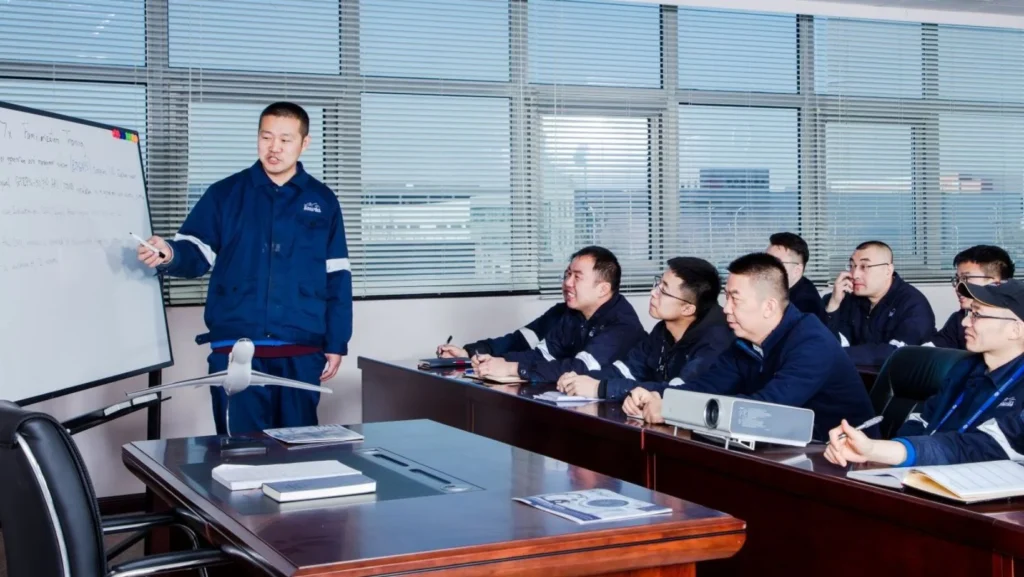
During maintenance of aircraft, the team follows manuals and job cards to ensure utmost safety of technicians. Employees are also taught safety rules, best practices at work, and the importance of strictly following and recording work steps. Everyone learns how to safely maintain the planes, use tools correctly, and take carefully disassemble/reinstall back to original condition.
ExecuJet Haite has safety policies and procedures in place. So, if workers find any unsafe circumstances, they can report anonymously or directly to management or quality department. We have various channels including a special SMS box, safety committee and more. The company also has a reward system in place to encourage employees to identify and report risks.
This interview continues after the below picture…
What changes or innovations do you see shaping the future of aircraft maintenance?
I think there are several changes that will reshape the business aviation MRO industry. New lightweight and strong materials are becoming more common for their durability. Also, instead of set checks, AI, data, and sensors will predict part failures. This cuts unexpected repairs and costs, reducing the downtime of an aircraft.
Lastly, I believe 3D printing may soon make some parts manufacture a quicker process, especially important for older planes. These innovations will evolve aircraft maintenance better, making it faster, greener, and safer.
What do you enjoy most about the job – and what keeps you motivated day to day?
What I love most about this job is getting to work closely with aircraft. They’re the best that humans have built, in my opinion. These days, aircraft technology is rapidly evolving and having to experience the technology in my daily work excites me.
What keeps me going every day is the sense of accomplishment I have after finishing tasks. This job certainly isn’t easy and sometimes I face tough technical problems or have to work fast. But after many years and experiences, and I see all the maintenance jobs I’ve helped finish and all the planes I’ve released safely, I feel great satisfaction. That feeling pushes me forward, keeping me excited and focused on the next job.
READ MORE ‘MEET THE MECAHNICS’ INTERVIEWS…