UATP Airline Distribution: The heavy lifting required for airlines to take more control of the offer
Greater control of the offer by airlines is something they may regret wishing for, the UATP Airline Distribution conference was told.
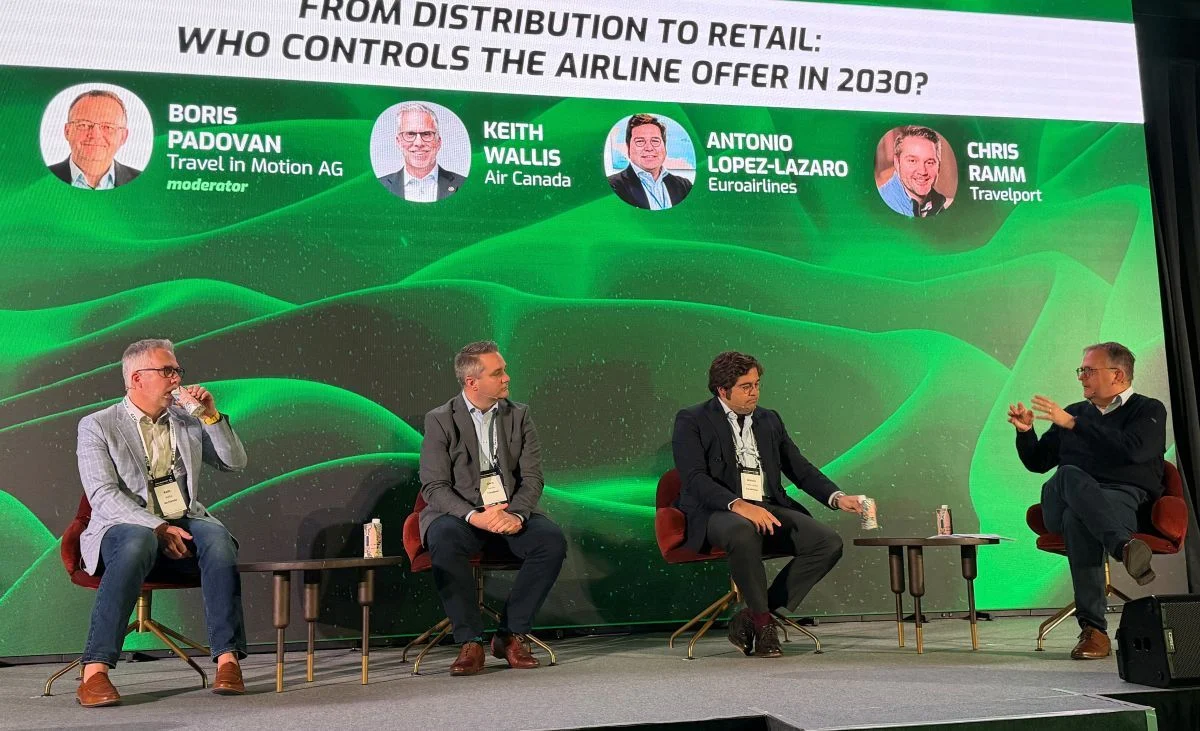
A panel that debated who will control the offer in 2030 as carriers look to make modern retailing a part of their future heard from Air Canada’s Keith Wallis.
The operator’s managing director of enterprise platforms and cargo products, said airlines have “in some ways” always “owned the offer”.
But he added: “Historically they have outsourced a lot of the heavy lifting to our partners in terms of dealing with some of the shopping that comes in with that demand.
“The saying is be careful what you wish for. Now, we want to control the offer more than we have historically and to go in a more merchandising direction, but that requires a huge lift from the airlines.
“A lot of that is starting to come home to roost a little bit. We realise being a tech company is hard to do.
“If we want to really innovate more in the space we are going to have to invest a lot more. That does not mean there’s not a role for aggregators, there is, but we now know a lot more from historical data what consumers want from us.”
Antonio Lopez-Lazaro, chief executive of Euroairlines, said the main challenge is that control of the offer continue to rely on legacy Passenger Service Systems (PSS).
He said these are not built to importing content for fare exporting and yet airline are needing to expand reach with GDS, New Distribution Capability (NDC) and API content.
Chris Ramm, head of EMEA and India and global airline sales strategy at Travelport, said the question of who owns the offer is nothing new and has been around for decades.
“We do not see it as a threat at all,” he said. “It’s entirely reasonable that an airline wants to control its offer. Control and distribution are not mutually exclusive – you need both.
“The technical complexity in owning and controlling that offer – managing that and distributing that and making it usable and transactable – that’s where a partner like Travelport, and other partners, come in because there is more complexity than there ever has been.
“Now it’s a bit of a minefield, a minefield that companies like ours are really well placed to manage because we have the infrastructure in place.”
The panel agreed that partnerships allowing customers to self serve on indirect channels just as they are able to on direct channels will continue to be important, particularly when it comes to disruption management.
Wallis said the role of aggregators is going to get more difficult if all airlines are going to follow different paths in terms of creating and displaying new products, and disruption management make that even more complex.
The “heavy lifting” airlines face is to rip out old technologies so that customers can jump between channels seamlessly and also to not just manage the offer and the order but, crucially, the settle and deliver elements.
“Those to pieces at the end are incredibly important. We focus on how we are going to create offers…we do not think about how we are going to complete the in the background and run them in the airport.
“We have learned over time there are some ancillaries that sell well at the initial time of booking and there are some that just do not. We have not done a good job of marketing those in the travel flow.”
Ramm said that despite the promise od NDC allowing a more personalised offering very little personalised content is currently coming through the channel. “Twenty airlines are probably producing the majority of personalisation,” he said.
More data is available today than ever before, added Ramm, who agreed with Wallis that greater attachment rates for ancillaries should be a key driver for changing behaviour to maximise revenues.
Wallis responded: “I’m hoping that new technology built by our partners will help with this. We have, to a certain extent, replatformed the industry, we now need to put the offers out there in to the world.
“A lot of offer management technology within airlines is pretty limited. We need to create these offers to get customers to desire them, to pull the rest of the community to this environment with us.”
Ramm said he believes the industry now gone through some pain to make sure the right infrastructure is in place Wand we will see far more innovation in terms of offer going forward”.
Wallis envisaged a time when customers pay to have bots working for them in a new world of agentic AI. “Personal agents find what you want and puts it in your wallet and you pick the right one. Do my customers actually see my website over the next five years?”