MRO Global Outlook 2024: Sunny with occasional downpours
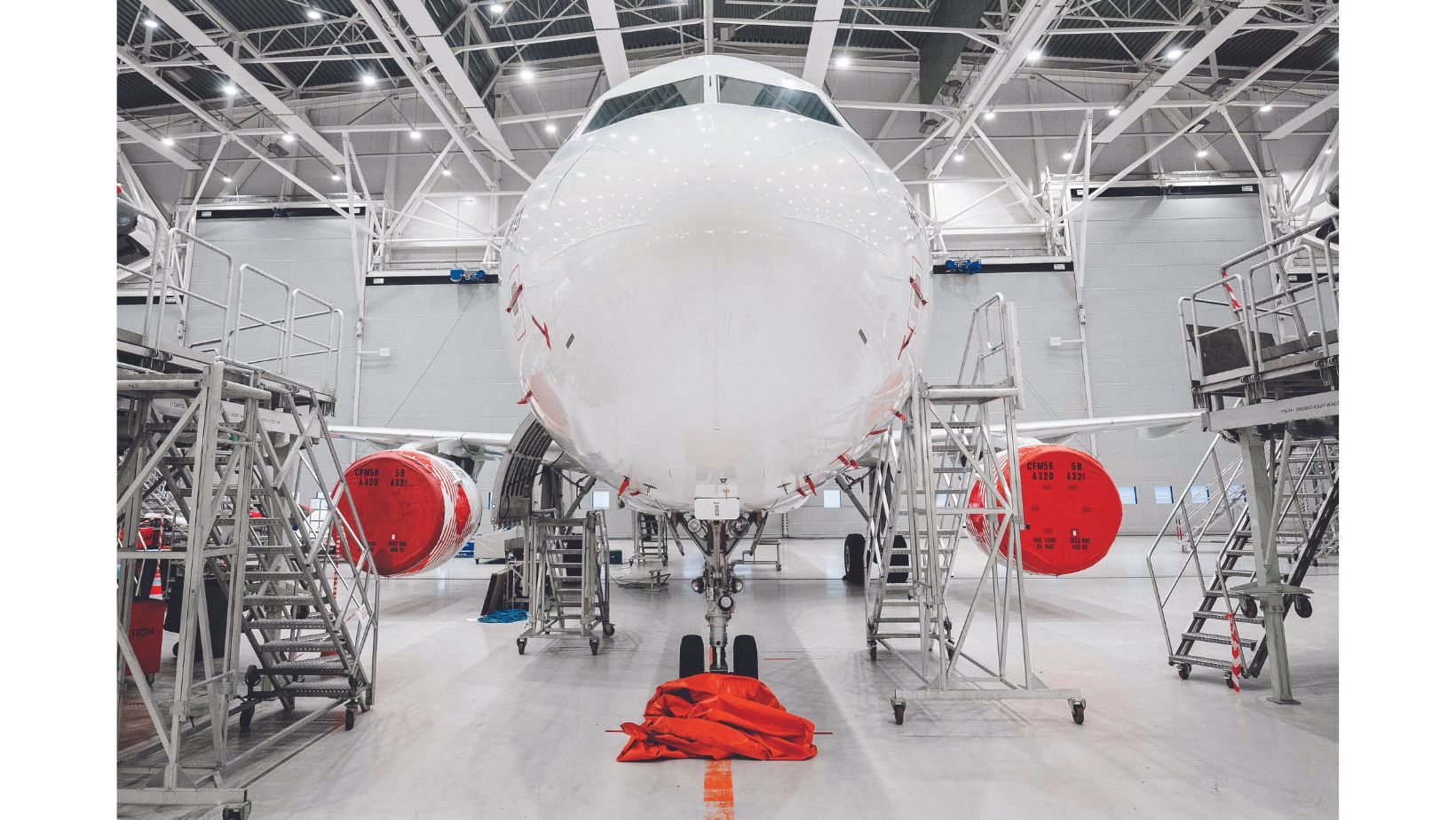
The MRO market in the coming year is set to be very busy, but industry optimism comes with more than one note of caution, as Bernie Baldwin reports for MRO Management.
“If it’s not one thing, it’s another!” The exasperated comment often heard when someone overcomes one adverse event only to find themselves facing another major challenge.
Such a feeling seems likely among MRO companies. Having fought through the Covid-19 pandemic, along came Russia’s attack on Ukraine, supply chain issues and now further heavy conflict in the Middle East. All these have knock-on effects on the aviation industry and therefore on the MRO sector too.
Looking at how the global MRO market might fare in 2024, with much of the global fleet now returned to service after the pandemic and a growth phase under way, IBA president Phil Seymour reports that the demand across all types of maintenance is much higher than a typical/normal year. “For example,” he says, “as well as the delayed maintenance (pent-up maintenance demand), supply chain issues have meant that turnaround time is lengthening.
“The supply chain here includes both material shortages and manpower constraints. New material prices have increased and that has led to searching for used serviceable parts, PMA and not just new parts.”
Seymour continues: “With some older aircraft candidates, which traditionally would have been parted out to provide used material, going for freighter conversion, this has led to fewer opportunities to source that material. Also, the MROs (both airframe and engine shops) have suffered with staff shortages and, although that may be alleviated with new hires and apprenticeship schemes, it takes years to replace the experienced folks with the new hires. That slows down the process of teardown and inspection, and causes additional quality checks to be made. Add to that the current engine issues of the Pratt & Whitney GTF and we don’t expect to see this improving until 2025 at the earliest.”
Louis Mallette, senior vice president operations at AJW Technique, notes that industry analysts are predicting a full recovery for the aviation sector in 2024. He says: “The latest air travel outlook released by Airports Council International (ACI) predicts passenger traffic will reach 9.4 billion passengers globally next year. While this will increase flight schedules and no doubt fleet expansion for operators, the continued impact of labour shortages is still a factor to consider and will continue to affect the MRO sector.”
Mallette adds: “We are seeing growth in active fleets and a general increase in flying hours across all regions. Barring any geopolitical effects, which could upset air travel, we expect the component repair shops such as AJW Technique, to be operating at close to maximum capacity.”
Inga Duglas, chief commercial officer at Magnetic Group, believes that the estimations set during the pandemic about the fleet scrap rate were off the mark. She says: “Maintenance organisations, operators and asset owners feel that rather intensely due to the lack of capacity. The market is reacting to the demand by building and expanding facilities; however, that does not solve the main problem – insufficient workforce.
“This continuous issue brings different market players, even competitors, into cooperation to grow the pool of aviation specialists – and make the aviation industry more attractive than ever. But, as with any growth-oriented goal, it takes time.
“It’s no secret that the next few years will be challenging,” Duglas continues. “It will test long-term relationships to avoid ‘no slot’ scenarios. The situation will require revision of maintenance planning, people training, investment to attract talents, raising capital for new technologies and their implementation, and inevitably, adapting pricing.
“Yet, not all is black and white. The upcoming changes can be perceived as welcome, too. As they inherently carry a new take on growth strategies, so the market will have to find a way. But after the past few years, the industry as a whole has become more agile and had its stamina strengthened.”
Returning to the aforementioned fleet scrap rate, Duglas comments on the amount of work required for out-of-production types to keep flying and how the rate of these types exiting the fleet is changing. She explains: “A reduction in the aging fleet was expected. However, the tendency this time has been different and two-fold, both positive and negative.
“The demand and load at MROs goes beyond their capacity. But it also presents challenges, such as a high risk of unexpected repairs and issues with the supply chain, which may jeopardise the planning done at any MRO. So, fleet changes depend a lot on OEMs. That’s why, within the next few years, we hope to observe a new trajectory.”
Also assessing the work needed to keep out-of-production types airworthy is AJW Technique’s Mallette. He says: “Looking at narrowbody aircraft as we approach 2024, we see customers holding off on previously planned retirements, and continuing to fly older aircraft for a further one to three years, due to the GTF problems grounding a portion of the A320neo fleet.
“This is resulting in additional repair work flowing into our shops, as flying hours on the older aircraft will increase whilst the newer aircraft are parked. In addition, the delayed retirements will reduce the flow of surplus material, so repairing the unserviceable components will be needed and the OEM supply chains will need to continue their recovery efforts to support the industry.”
According to IBA’s Seymour, PSA storage charts using IBA Insight show many older stored aircraft are returning. He says: “This has also been exacerbated by the new aircraft production numbers dropping below the expectations, for example 737 MAX delays.”
Given the challenges in the supply chain, could this be the time for 3D-printing/ additive manufacturing to make its mark on MRO processes? “It’s assisting in some areas such as interior parts, but the heavy engineering aspects of aircraft structures and engine internal life-limited parts (LLPs) are the critical path,” says Seymour.
Laurynas Krasinskas, head of design and office of airworthiness at Magnetic Creative, believes that from a broad industry perspective, applying 3D-printing across MROs could be immensely beneficial. “But the practice also presents its own set of challenges,” he remarks, outlining both those and the benefits.
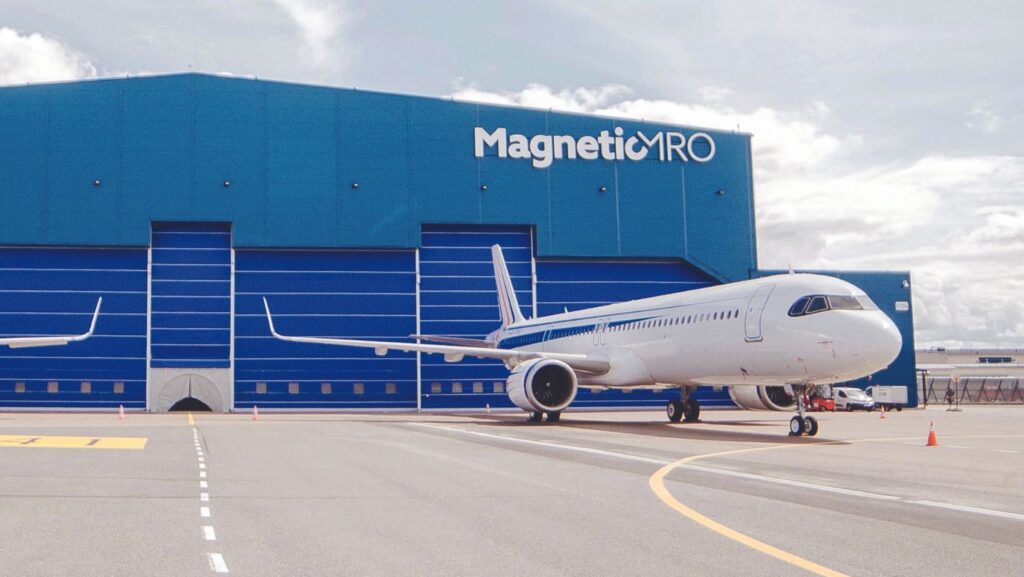
This article continues after the below picture…
“Having in-house 3D printing capabilities would allow the production of specific aircraft components, especially those no longer in production or challenging to source, all while reducing lead times and improving their ability to service a broader range of aircraft models,” Krasinskas explains. “3D printing also enables rapid prototyping when developing new repair and maintenance solutions. This is likely to enable quick testing and refining of designs before full-scale production, potentially saving time and resources.”
Krasinskas goes on: “Over time, having such a capability can lead to cost savings by reducing the reliance on external suppliers and decreasing the need for maintaining extensive inventories of spare parts. Moreover, traditional manufacturing processes often involve long lead times for ordering, producing, and delivering parts. 3D-printing can significantly reduce these lead times, enabling quicker turnaround for repairs and maintenance.
“Another benefit is that 3D printing can produce parts with complex geometries that are difficult or next to impossible to achieve with traditional manufacturing methods. It also improves performance and efficiency. Keeping up with advancements in 3D printing materials is essential. For this reason, MROs need to ensure they use materials suitable for aviation applications, including those with the required strength, durability and temperature resistance.”
The primary challenge comes from the area of certification and regulatory compliance. “Ensuring 3D-printed parts meet aviation industry standards and regulations can be complex. Obtaining the necessary certifications and approvals for 3D-printed components can be challenging and time-consuming,” Krasinskas elaborates. “Of course, choosing suitable materials for 3D printing is critical. Aircraft components require specific material properties, such as strength, durability and resistance to extreme temperatures. Identifying materials that meet these requirements can be a challenge.”
There is also a downside to production speed. Krasinskas adds: “While 3D printing can be faster than traditional manufacturing for some components, it may not be suitable for high-volume production or large structural parts. Balancing production speed and volume is critical. And though 3D printing offers design freedom, it can also lead to overly complex and costly designs. Striking the right balance between design complexity and functionality is essential.”
AJW Technique’s Mallette is less convinced about the immediate potential. He says: “On the component MRO side, 3D printing and additive manufacturing will have no real effect for the foreseeable future as we are required to use certified spare parts, typically purchased from the OEMs. Over time we would expect an increase in less critical areas such as cabin components. However, for AJW’s core component MRO business, we do not see any short- to medium-term effect.”
Noted earlier was the question of whether personnel numbers are going to be able to meet the demand. Mallette says: “The MRO sector is struggling with the post-pandemic skills gap, impacted by the rapid pace of technological advancements and a need for education within the current workforce. Developing and maintaining a highly skilled workforce equipped to handle emerging technologies is not an option, it is essential.
“The availability of trained technicians is extremely limited, so workforce planning needs to be addressed more proactively and we need to account for the training required before the skilled technicians are effective. Existing technicians need training and upskilling, and we must also focus on attracting new talent from technology-hungry Gen-Z.”
Ene Krinpus, chief human resources officer at Magnetic Group, stresses that the lack of aviation professionals “is not a recent issue and has hindered the MRO sector for decades”. She notes that despite a need for “at least 600,000 new mechanics worldwide over the next decade”, technical trades are becoming less and less popular among younger generations.
Krinpus adds: “Subjects such as maths and physics are disappearing from high school curriculums, causing fewer people to choose engineering as a career path. The few choosing it might not choose aviation, making the industry an underdog. Although many find aviation fascinating and awe-inspiring, it requires a lot of discipline, time, learning and an ‘innovation-forward’ approach.”
She continues: “Considering that there are more and more aircraft and components that need to be maintained but fewer professionals, the upcoming few years are likely to be exceptionally complicated workforce-wise. The only way for companies to tackle it is to put effort into popularising aviation as an industry and as a trade. Offer as much as possible in internships and apprenticeships and join forces to develop the needed workforce together rather than competing for each employee individually, which doesn’t benefit anyone long-term.”
Phil Seymour is unequivocal on whether personnel numbers will be able to meet the demand. “Simply put – no!” he declares.
Thus, from the comments, it seems that if the overall outlook were a weather forecast, it might predict sunny periods but with occasional downpours. The industry needs to ensure it has its umbrella at the ready.
This feature was first published in MRO Management – November/December 2023. To read the magazine in full, click here.