A virtuous circle
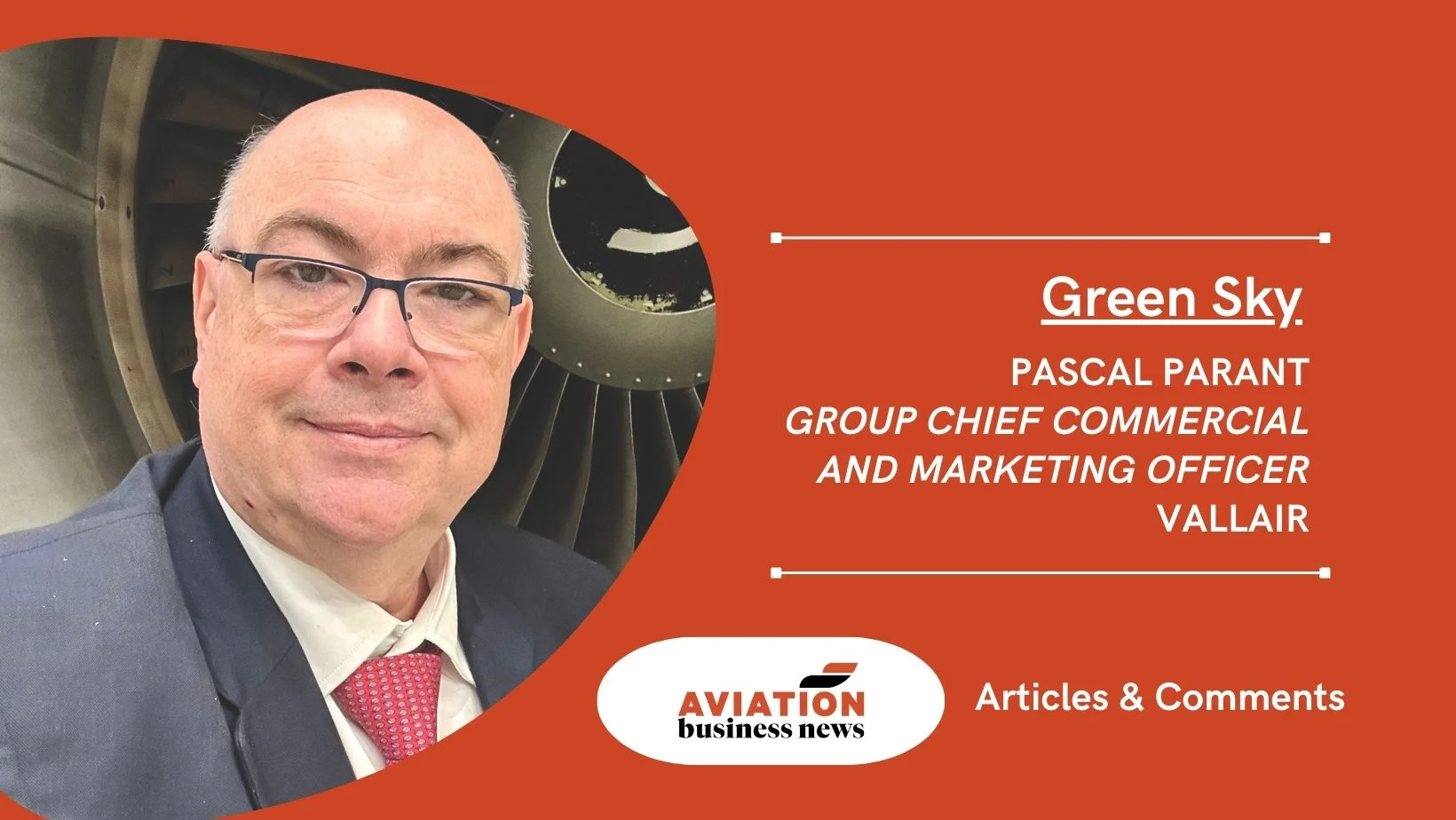
Pascal Parant, group chief commercial and marketing officer at Vallair, explains how circular-economy principles now underpin modern aircraft retirement.
There are around 32,000 commercial aircraft in service or storage today, each representing substantial lifetime asset value.
Aviation has long pursued environmental virtue through both new programmes and incremental optimisation, with platforms such as the Boeing 737 and Airbus A320 evolving over decades while retaining some common parts across generations.
This longevity has created two distinct end-of-life pathways. Older ‘n-2’ aircraft are dismantled and transformed into scrap metal or repurposed objects. More recent generations, however, continue to yield high-value components. Their engines, APUs, landing gears and LRUs can be overhauled, recertified and returned to airline maintenance cycles.
Increasingly, this applies to ‘n-1’ aircraft and even to ‘n’, the newest generation: more than a dozen A320neo airframes with GTF engines were parted out in the past year, their components helping ease supply-chain pressures.
Today, up to 95% of an aircraft’s mass can be reused, recycled or valorised. Yet recycling carries ESG and legal responsibilities: aircraft contain hazardous fluids, metals, batteries, composites and even small radioactive sources. Under European law, the final owner of the aircraft is responsible for compliant dismantling, making proper teardown an environmental, regulatory and safety requirement under EASA, ICAO Annex 16 and EU waste directives.
Economic and ESG value
Using overhauled components (USM) reduces CO² emissions by 50-90% depending on the part – a key principle of the circular economy promoted by the EU, ICAO and AFRA.
Financially, an end-of-life narrowbody can generate anywhere from $2.5 million to $8 million in recovered value, with engines contributing 70-85%. Amid global shortages, returns can be realised within 6-12 months, while re-using green time on engines and landing gear can deliver 15-30% extra value in the final months of operation.
USM also shields airlines from rising OEM catalogue prices, which have increased 8-15% annually since 2022. Operators can cut maintenance costs by 20-40%, while lessors benefit from value preservation when assets are returned off-lease or unserviceable.
Vallair’s role
Vallair supports aircraft through their full lifecycle: base maintenance, storage, component MRO and teardown. Its Montpellier site specialises in narrowbody maintenance and limited dismantling, while its Châteauroux facility offers narrowbody and widebody base maintenance, long-term storage and full teardown capability.
Working with specialised recycling partners, Vallair provides turnkey value maximisation and compliance. High-value components are handled with care to extend their useful life and minimise the need for carbon-intensive new production.
Through its vertically integrated model – including P2F conversions that extend aircraft life by 15+ years – Vallair ensures aircraft deliver maximum value with minimum environmental impact, from first flight to final teardown.
This feature was first published in MRO Management – November/December 2025. To read the magazine in full, click here.
