Components: From backlog to back on track
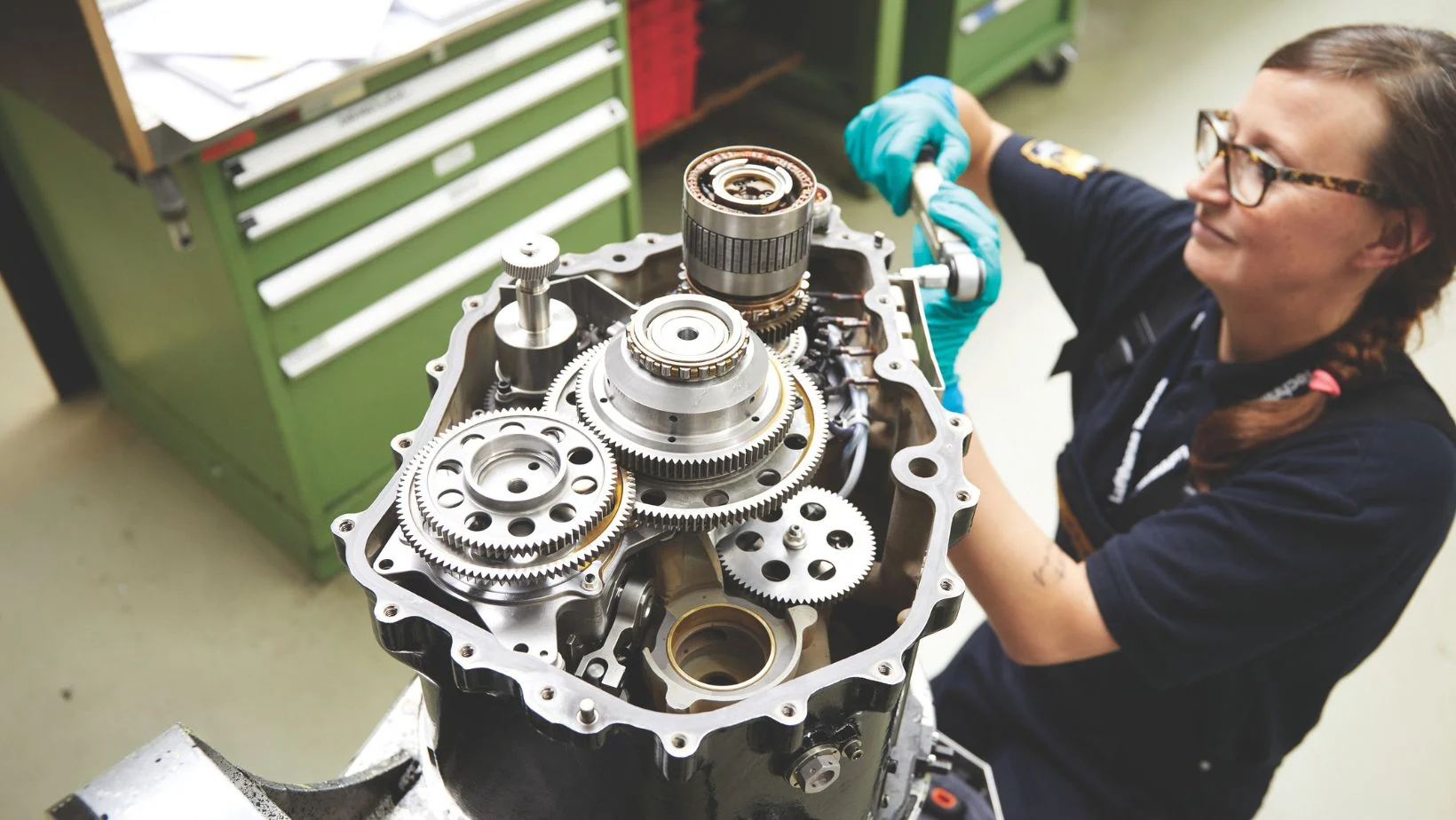
Industry players are using a broad range of initiatives, including AI, to control their component supply chains. Kevin Rozario reports.
Demand for MRO services is very healthy, but obtaining components in a timely way remains difficult.
To navigate this scenario, MROs and OEMs are taking a variety of measures to stay on top of turnaround times (TATs) to retain some competitive advantage.
Giant manufacturers like Airbus stick to pre-emptive measures such as on-site support as an advisory service to answer MRO and operator questions.
Alexandre Arnau, maintenance markets and strategy leader at Airbus, said: “We continue to send expert engineering and technical teams for major projects (to) immediately address any discrepancies or challenges with documentation and kits.”
Meanwhile, GE Aviation is utilising 3D printing to manufacture certain aircraft engine components, thus reducing production time and waste, and Honeywell Aerospace has applied digital tools to improve inventory management and predict demand for spare parts.
At Ametek MRO, which has 12 locations globally and services more than 40,000 aircraft components, the tricky supply chain situation is nothing new. However, it sees a post-Covid-19 ‘new normal’ emerging.
Mike Audus, divisional vice president and business unit manager for Europe at Ametek MRO, commented: “There have always been delays but the macro environment is resetting. The obvious challenge was the semi-conductor market (during Covid-19), and then steel manufacturing; these have both set up a ripple effect across the global supply chain.”
For example, sanctions on Russia, the biggest producer of titanium, means that getting hold of aviation components in which the metal is used has become problematic.
Adam Guthorn, managing director at consultancy Alton Aviation, said: “There continue to be issues with titanium, which is blended into a lot of metallic alloys. This has been the case since the invasion of Ukraine, a little over two years ago and there are few signs of it getting better.”
Being proactive can help in other situations. Ametek MRO prioritises regular discussions with clients to establish accurate forecasting and ‘flow’. “Everyone is managing inventory levels very closely and trying to get back to that just-in-time mindset,” explains Audus. “Add to that obsolescence and technology upgrades, and it then becomes all about data. It’s early days but there are some interesting uses of artificial intelligence (AI) in this area that are being explored.”
Broadening the supply network
Lufthansa Technik, which has more than 500 airlines as customers, is leveraging used serviceable material (USM), where possible, to mitigate delays.
“This helps us maintain high service levels while navigating supply-chain constraints,” said Raphael Mertens, head of strategy and business development in Lufthansa Technik’s aircraft component services (ACS) business.
Airbus also points to an increasing appetite for USM in the aftermarket business coming from the secondhand market and dismantled aircraft.
“With companies like Tarmac Aerosave in Tarbes for Europe, or Airbus Lifecycle Services Centre in China, Airbus is actively working at providing these parts to our customers, together with its subsidiary Satair,” said Arnau.
Lufthansa Technik also relies on an extensive array of suppliers and partners to source materials. “This network allows us to tap into multiple sources to obtain the necessary components promptly,” said Mertens.
Meanwhile, AI is becoming integrated into the company’s Total Component Support (TCS), claimed to be the world’s largest aircraft components pool. It is an established provisioning programme for almost every component that can be removed from a commercial aircraft.
Mertens said: “We are continually refining our pooling system to support TCS. By implementing advanced AI and machine learning (ML) algorithms, we can predict demand more accurately, optimise inventory levels, and improve overall efficiency.”
TCS works in an open loop where contracted airlines immediately receive a serviceable component from Lufthansa Technik when needed. Unserviceable components are repaired, either in one of the company’s in-house facilities or subcontracted within its network.
Elsewhere, APOC Aviation is strategically purchasing aircraft for teardown to secure components to ensure a consistent supply of essential parts and mitigate delays typically associated with sourcing from external suppliers. “By maintaining our own inventory from dismantled aircraft, we can respond more swiftly,” commented Hardi Jamil, APOC Aviation’s vice president of component sales.
Not a blame game
Supply-side lags appear to be an accepted fact of life. “While they may not be happy with it, there’s a broad resignation from customers that things are not back to normal yet and (getting) materials and components will take longer than it did historically,” remarks Guthorn.
Lewis Prebble, president of engines expert StandardAero does not lay blame at the door of component manufacturers. He believes they were having to respond to stop-start demand signals, and not able to ramp up easily because nobody predicted the strength and speed of the industry’s recovery. However, he was less happy about costs.
“The post-pandemic escalation in parts prices has been frustrating, both for operators and MROs alike,” said Prebble. “Hopefully, it will be tempered as component supply catches up with demand.”
On this point, APOC’s Jamil commented: “While manufacturers have made strides in enhancing supply chain resilience, there are still areas for improvement, particularly in scaling up production capacity and diversifying supply sources to stabilise prices. I would emphasise stronger partnerships and collaborative forecasting with manufacturers to better align production schedules with anticipated demand.”
This article continues after the below picture…

While StandardAero faces delays for certain components – which vary from engine platform to engine platform – the company has workarounds. Alex Youngs, vice president of marketing, airlines and fleets, said: “We place orders for spare parts in anticipation of shop visit demand and draw on the extensive parts repair capabilities of our in-house components repair services (CRS) team. Thirdly, we make use of USM, sourced through PTS Aviation, our dedicated asset management subsidiary, and also through third-party USM partners.”
In practical terms, component issues have led to StandardAero seeing a sharp growth in the development of repair schemes for the CFM LEAP-1A and -1B engines for example.
This includes over 225 repairs developed by its CRS team, many of which relate to the new material technologies utilised by the LEAP.
Youngs said: “With an initial wave of LEAP performance restoration shop visits (PRSVs) anticipated in the coming years we can expect to see this trend continue, supporting the needs of the global A320neo and 737 MAX operator base.”
Staffing for an efficient future
It seems that the industry has buffered itself well to make the component supply chain more manageable. At Airbus, Arnau expects it to normalise within the next two to three years. “In the meantime, the industry will look into options to increase the use of alternative manufactured/repaired parts like PMA (part manufacturer approval) or DER (designated engineering representative) repair,” he said.
Alton Aviation’s Guthorn added: “Companies are going to PMA suppliers because they can often deliver the parts faster than the OEM original manufacturer.”
For Lufthansa Technik, strategic initiatives are in place to address staffing, replacement parts, and new technology, as part of its ‘Ambition 2030’ programme. Mertens said: “We will be intensively ramping up our in-house MRO operations over the next few years. This includes hiring significant staff in various locations to ensure we have the capacity to meet increasing demand and improve operational efficiency.”
StandardAero’s Prebble acknowledges that the pandemic has had a lingering impact on the supply chain, especially the loss of skilled workers “and the closure of some third-tier suppliers”. Extremely strong demand both for new engine production and for ‘catch-up’ MRO shop visits is now a scenario it has to manage into the future.
APOC Aviation is also putting the focus on improving staffing through targeted training as well as the adoption of new technologies. Jamil commented: “With an anticipated increase in the use of automation and AI, managing replacement parts inventory and overall supply chain operations are expected to become more efficient. These tech advances are crucial for capacity planning, demand forecasting, and inventory management.”
Guthorn summed it up: “The supply chain is in a better place today than it was 12 months ago but it’s still very far off where it was in 2019. Because it is so interconnected, you’re relying on outside suppliers who are relying on other suppliers. So, it is still riddled with weak links.
“The large well-capitalised companies are starting to get their processes back to normal, but if you’re still waiting on certain suppliers who are cash-strapped, or maybe can’t hire or put in a second shift, then there’s a ripple effect.”
Hopefully, those ripples will ease off in the coming 24-36 months in line with Airbus’s prediction.
This feature was first published in MRO Management – July 2024. To read the magazine in full, click here.