Meet The Mechanics: An interview with Brandon Biggs, Honeywell Aerospace
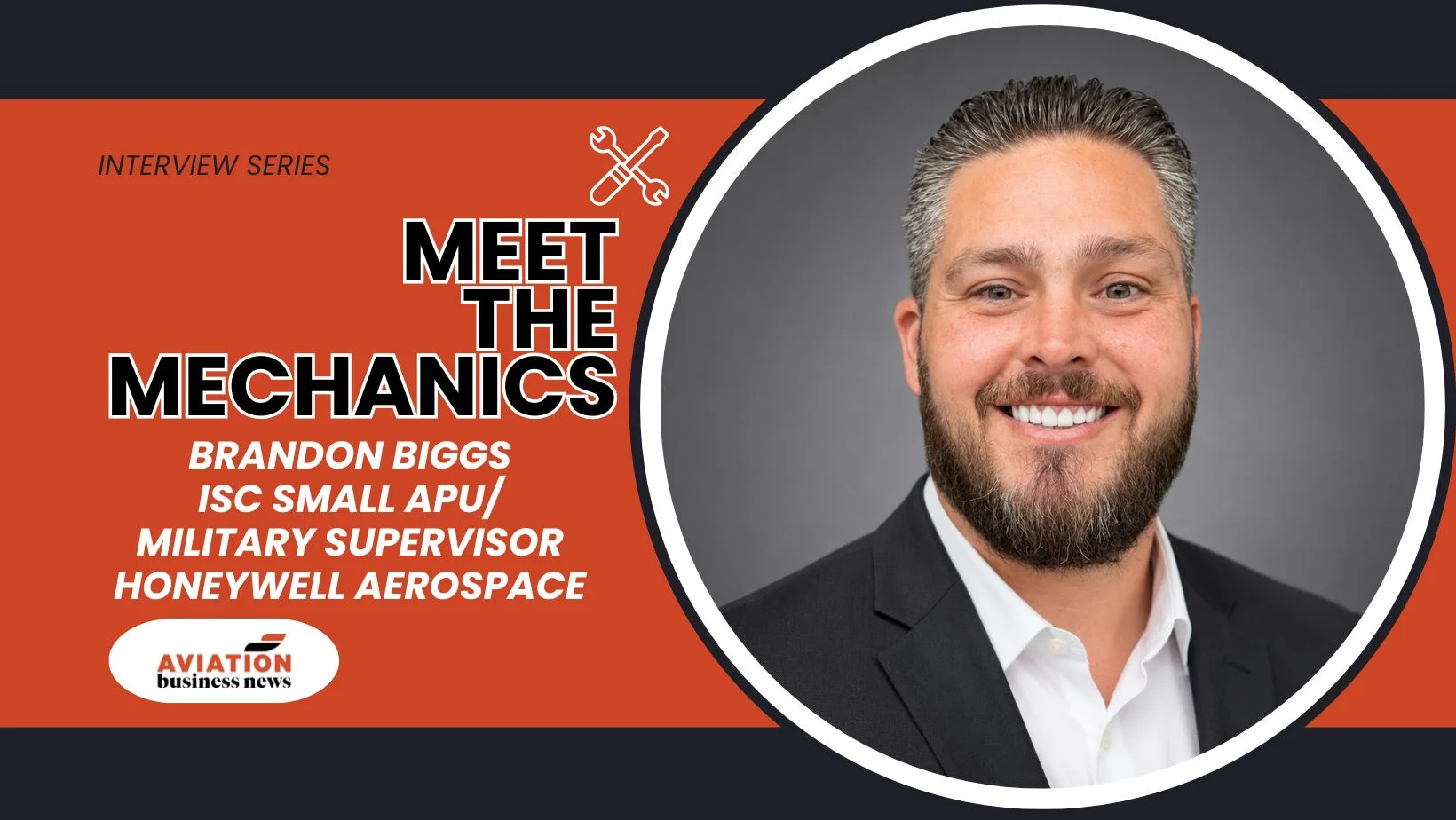
In the next instalment of our ‘Meet the Mechanics’ interview series – created to shine a light on the hands-on professionals who keep aircraft in top condition – we feature Brandon Biggs, ISC Small APU / Military Supervisor at Honeywell Aerospace (Phoenix Operations), who shares his journey from mechanic to supervisor-mechanic and explains why people, purpose and precision remain at the heart of aerospace maintenance.
How did you get into aerospace, and what inspired your career path?
I grew up watching both my father and grandfather build great careers at Honeywell, and seeing the pride they took in their work made a huge impression on me.
From a young age, I knew I wanted to follow in their footsteps and be part of Honeywell Aerospace. Their example inspired my path and motivated me to build a career I could be proud of.

Can you walk us through a typical day or shift in your role?
My day starts early with a 5:30am HTF meeting, followed by our daily tier meetings that run until around 10:00am. Once those wrap up, I shift my focus to our weekly and monthly customer commitments which involves identifying part shortages, reviewing risks, and making sure every engine scheduled to ship is on track.
I make it a point to walk all my lines every day. Saying hello to each mechanic and showing genuine appreciation is important to me; our people are the heart of what we do.
At 2:00pm, we have a daily review call to go over progress, challenges, and any actions needed. After that, it’s all about closing out the day’s priorities and heading home.
What’s one particularly memorable challenge you’ve faced on the job, and how did you resolve it?
One of the biggest challenges I faced was transitioning from the assembly floor into a supervisor role. I had strong relationships with my teammates as a mechanic, and shifting those into supervisor–mechanic relationships took some adjustment.
What made the transition successful was realising that my team simply needed to know I was there to support them. Once I focused on being present, helpful, and consistent, the shift became much smoother. It ended up being a great growth experience for all of us.
How do you and your team approach safety and reliability in your work?
Safety is foundational for us. We wear PPE – including safety shoes and glasses – every day, and we follow build MOTs that are designed with safety in mind from start to finish.
Reliability is equally critical, especially with the number of military APUs we support.
I had the opportunity to work closely with an F‑35 crew chief and hearing first hand how his friends rely on these aircraft really reinforced the importance of what we do. It’s a constant reminder that our work directly impacts the people who depend on these systems.
What changes or innovations do you see shaping the future of aerospace?
I see drones playing a major role in the future of aerospace, not replacing pilots, but expanding capabilities, especially for military applications.
Working on the F‑35 and seeing its targeting and navigation systems up close really highlighted how much room there still is for innovation. The technology is advancing quickly, and there’s a lot of exciting growth ahead.
What do you enjoy most about the job – and what keeps you motivated day to day?
I enjoy the daily challenges the most. Problem‑solving, finding solutions, and making things happen is where I thrive, and this role gives me plenty of opportunities to do that. I also genuinely enjoy working at Honeywell Aerospace.
To stay motivated, I often talk with my father about how much he’s enjoying retirement – it reminds me of the long‑term rewards of building a strong career here, and it keeps me focused on the future.
Looking back on your time as a mechanic, what was the most satisfying/rewarding maintenance task or project you worked on, and why?
One of the most rewarding programmes I worked on was the F‑35/G230 line. We had a mechanic on the team who had previously served as a crew chief on an F‑35 in the Marines – his name was literally on the side of the aircraft he supported, and many of his close friends were pilots. Hearing his first hand stories about the aircraft and the people who fly them made the work feel meaningful on a different level.
On top of that, those jets fly over my house almost every night, so it’s pretty incredible to know I played a part in building something that’s out there protecting people and shaping the future of aviation.
In your view, what practical skills or habits separate a good mechanic from a great mechanic?
A good mechanic can identify issues as they come up, but a great mechanic understands why the issue exists and how to resolve it correctly and efficiently.
From working alongside many highly skilled mechanics, I’ve learned that technical ability is important, but becoming truly great takes time, curiosity, and a commitment to understanding the bigger picture.
We’re fortunate at Honeywell to have a large group of long‑tenured mechanics who consistently demonstrate that level of expertise – and they set the standard for what ‘great’ really looks like.
What advice would you give to someone starting their career as an aerospace mechanic today?
Now that I’m in a leadership role, I get to talk with all of our new hires, and I give them all the same advice: slow down and learn. These are aircraft engines – there is absolutely no room for error.
To be successful here, you have to take the time to understand the work, the processes, and the ‘why’ behind everything you do.
We’re lucky to have many experienced mechanics who are more than willing to share their knowledge with anyone who shows the willingness to learn. Taking advantage of that mentorship early on makes all the difference.
READ MORE OF OUT MEET THE MECHANICS INTERVIEWS HERE
DID YOU KNOW…
Aviation Business News is looking for the best employers in the aviation industry to champion the careers and opportunities our exciting sector offers.
Our Best Places To Work In Aviation Awards 2026 are open for registration and, once again, entrants and winners are able to earn the accolade absolutely free of charge.
To find out more about the awards, our eligibility criteria and to register go to: bestplacestoworkaviation.com