IATA AGM: EU e-SAF targets ‘Utterly detached from reality’
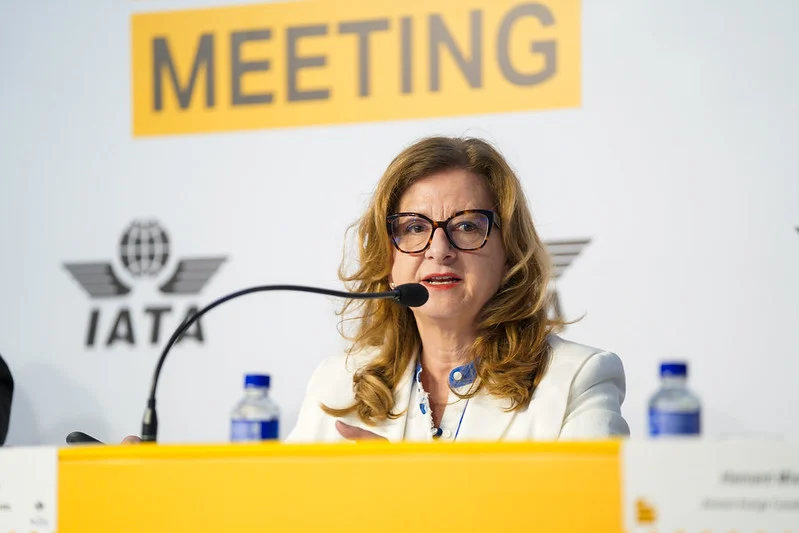
A speaker at the IATA General Meeting has been deeply critical of e-SAF policy in the EU and UK.
“The 2030 e-SAF targets by the UK and the EU are beyond unrealistic – they are utterly detached from reality,” said Marie Owens Thomsen, IATA’s Senior Vice President Sustainability and Chief Economist.

The EU and the UK have mandated e-SAF production of around 0.6 million tonnes by 2030. However, global production capacity currently operating and under construction stands at around 0.02 million tonnes with only one single production site in operation. It would take approximately 20 commercial-scale refineries to achieve the mandated volume. Moreover, no new final investment decisions for e-SAF facilities have been made over the past year.
READ: IATA AGM: ‘Another disappointing year’ for SAF production
“It is a reckless energy market creation strategy to impose mandates before production is enabled. Such a strategy will only drive up the price,” Thomsen told delegates.
“Coupled with penalties, it diverts scarce resources from being allocated to actual CO2 emissions reductions. The strategy is also bewildering given that Europe has the highest renewable energy prices in the world. A serious strategy would first scale renewable energy production to drive its price down and build the e-SAF production capacity on sound economics. Only at that point can mandates achieve the desired results,” she concluded.
Along with SAF (from biofuel sources), e-SAF (electro-SAF) will also play a growing role in air transport’s decarbonisation. The conversion of renewable electricity using a power-to-liquid (PtL) process can produce e-SAF. E-SAF does not require biomass or waste oils, but does require large amounts of electricity, hydrogen, water, and CO2.