ATWEU 2024: Collaboration and communication are key to innovation in aerospace
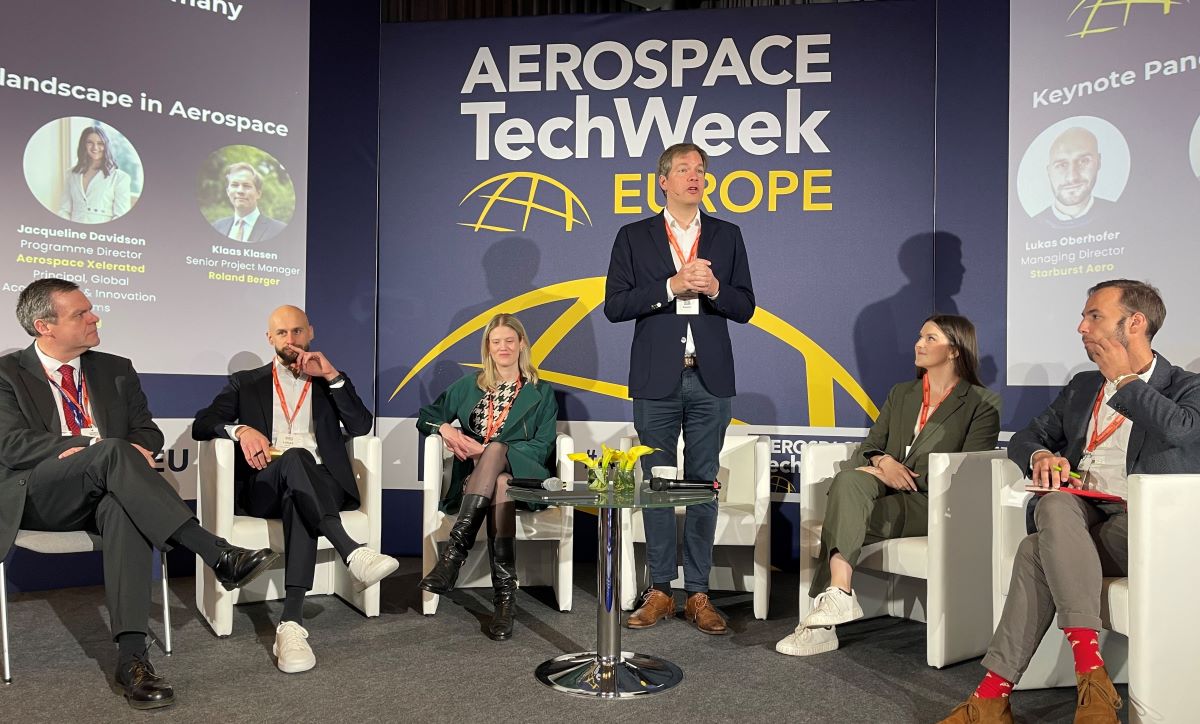
The aviation sector was encouraged to put competition to one side and collaborate to ensure innovation flourishes and new technologies are developed and adopted.
An expert panel at this week’s Aerospace Tech Week in Munich discussed the current innovation landscape for innovation in the aviation and aerospace sector.
Jacqueline Davidson, program director at Aerospace Xelerated, the start-up accelerator established by Boeing, said she sees a lot of Research & Development get shelved.
“There’s not enough focus in creating the network for the technology to actually flourish. You see a lot of R&D sitting on shelves and becoming obsolete.
“As an EOM we are in a duopoly so it’s very, very competitive. What are the things we can collaborate on because not everything has to be competition.”
Davidson said more collaboration is essential to tackle some of the big issues like sustainability and in emerging areas like urban air mobility.
“If we are able to pool our resources to tackle some of the key pain points enabling this future technology then we will be able to make more of a success of it in the near term.
“From an R&D perspective and network perspective we keep hearing about the importance of technological innovation.
“While that’s extremely important, we do not really focus on the reality of the technology being adopted.”
Davidson said Boeing is intentionally not in Aerospace Xelerated name because it sees the issues being addressed by innovation as bigger than Boeing.
She said the accelerator brings start-ups together with key players in the sector in a “safe space” to share the pain points they are prepared to invest in addressing.
Arlette van der Veer, program manager strategy and technical services at KLM Cityhopper, said collaboration in areas like sustainability is important.
The airline is one of 22 that took part in the first SkyTeam sustainable flight challenge competition which requires winners to make all their learnings public.
“It’s a catch 22, we all face the same problems and we all want to be more sustainable but we all want to sit on our knowledge to become the most sustainable. In the end we have to face this problem all together.”
Lukas Oberhofer, managing director of consultancy Starburst Aero said it “sits at the intersection of corporates, start-ups and governmental entities”.
He said start-ups are essential to fill the technological gaps corporates leave, but they are often left to fight against regulations that place safety as the uppermost priority.
“There’s a strong element of de-risking that needs to happen now because start-ups have no experience in the defence industry, they come from the civilian world.
“We need to hand hold them every step of the way to help them understand what it really means to be an aerospace company.”
Stuart Lindsey, head of aerospace modernisation at the UK regulator the CAA, said airspace has become a key battleground for innovation.
He said the regulator has to balance maintaining existing operations while enabling innovation which he said “is now one of the CAA’s core strategic goals”.
“What we realised was there was a gap in our understanding of how prepared we are. We are in the throes of preparing a regulatory readiness framework.”
The CAA looks at three areas: The readiness of the technology, the readiness of the technology vendors; and finally its own readiness.
The framework will allow the early conversations that are required with technology developers. “It’s talking to each other where we seem to get stuck.”
He added: “To know something you have to measure something…to get a feel of how ready we are, what’s the likelihood of success and get our heads round failing fast so you can try again.”
Two years ago the CAA introduced an innovation hub, effectively a “sandbox” virtual play area for innovation.
Lindsey said this was a “really good idea” but it got into difficulty when the innovation was taken out of the sandbox and “hit a brick wall” when exposed to real world regulation.
“Two things were going on, the CAA people in the innovation team had not got a proper understanding of real world regulation and the core regulation team did not have an understanding of regulation.”
The CAA is now starting to bring the regulation team into the sandbox sooner because it will always require a high standard of safety. “It’s a slippery slope if you think safety is a given,” he said.