
Meet The Mechanics: An interview with Nick Yeo, ExecuJet MRO Services Malaysia

In the next instalment of our ‘Meet the Mechanics’ interview series – created to shine a light on the hands-on professionals who keep aircraft in top condition – we feature Nick Yeo of ExecuJet MRO Services Malaysia who reflects on the moment that first inspired him to pursue aviation maintenance, the challenges of working in extreme conditions, and the teamwork and technology shaping the future of the job.
How did you get into aviation maintenance, and what inspired your career path?
I was first introduced to aviation maintenance by my physics teacher during a lesson on the theory of flight. He not only explained how aircraft are able to fly but also emphasised the critical role engineers play in maintaining and ensuring the airworthiness of aircraft.
That explanation sparked my curiosity and made me realise that aviation maintenance is not just about technical work, but about responsibility, safety, and precision.

From that moment, I was inspired to pursue this career path, and it has driven me ever since.
Can you walk us through a typical day or shift in your role?
A typical day as an aircraft engineer at ExecuJet MRO Services Malaysia starts at 8:00 AM with a morning meeting alongside my team. During this meeting, we discuss the tasks and targets for the day, including any special instructions, aircraft priorities, and updates from the planning team. After the meeting, everyone proceeds to their assigned station on the aircraft and begins work.
Each project is assigned a Lead Engineer, who is responsible for overseeing the progress, safety, and quality of the work being carried out. As a lead, part of my role involves inspecting ongoing tasks, ensuring all work is performed correctly, safely, and in accordance with approved procedures, and providing support wherever needed. If any defects or unexpected issues arise during inspections or maintenance, I will step in to assist the team – helping to troubleshoot the problem, guide them toward a solution, or escalate it if required. Hands-on support is often necessary to keep operations running smoothly and on schedule.
Before the end of the day, typically around 4:00 PM, we hold a coordination meeting with other Lead Engineers from different projects. In this meeting, we discuss manpower planning for the following day and aircraft movements, ensuring that resources are well-balanced and all projects remain on track.
What’s one particularly memorable challenge you’ve faced on the job – and how did you resolve it?
One of the most memorable challenges I’ve faced as an aircraft engineer was dealing with an AOG (Aircraft on Ground) situation in Northern China during winter, where temperatures had dropped to -19°C with slight winds. The aircraft was grounded at a remote airport with no hangar facilities, and I was tasked with replacing a smart probe – a job that typically takes around four hours under normal conditions.
What made this situation especially difficult was not just the technical task, but the extreme weather conditions and limited support infrastructure. Despite wearing multiple layers of thermal clothing, a full-length insulated jacket, and thick gloves, the cold was almost unbearable. I had to take frequent breaks to warm up and prevent my hands from going numb, which was essential not just for comfort, but for ensuring safety and precision during the repair.
Due to these conditions, the job ended up taking nearly eight hours to complete. However, I knew the urgency – our client needed the aircraft ready to fly the next morning for an international departure. I worked through the night, taking calculated breaks, staying focused, and ensuring the repair was done correctly and thoroughly despite the hostile environment.
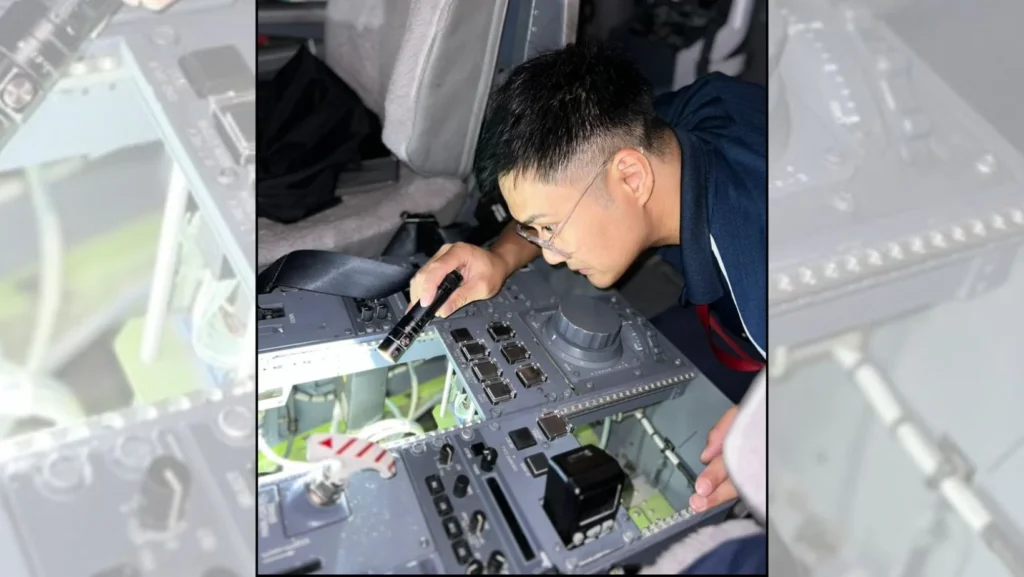
This interview continues after the below picture…
How do you and your team approach safety and reliability in your work?
At ExecuJet MRO Services Malaysia, safety and reliability are at the core of everything we do. We always rely on manufacturer-approved manuals and documentation to ensure consistency across MROs. This uniform approach guarantees that maintenance tasks are carried out precisely as intended, minimising variability and errors.
Our maintenance procedures are rigorously tested and certified, which is critical for maintaining the aircraft’s safety and airworthiness throughout its service life. Following these procedures strictly ensures the integrity of every system and component.
We place great emphasis on traceability by thoroughly documenting all work performed according to approved maintenance data. This documentation is vital for audits, regulatory compliance, and any future investigations, providing a clear record of all maintenance actions.
Finally, we use specialised tooling and equipment designed for specific tasks, which guarantees precision in handling components. Proper tooling helps prevent damage and ensures correct installations, which directly contributes to overall aircraft reliability and safety.
What changes or innovations do you see shaping the future of aircraft maintenance?
One exciting innovation is the integration of Augmented Reality (AR) and 3D Illustrated Parts Catalogues (3D IPC), introduced with the Dassault Falcon 6X. Dassault implemented the use of AR and a 3D IPC, revolutionising how maintenance is performed. Instead of relying on traditional paper manuals, engineers and technicians now utilise an interactive digital catalogue of aircraft parts. This 3D IPC enables users to zoom, rotate, and explore models, providing a clearer understanding of complex assemblies and components.
This innovative approach not only enhances the accuracy and efficiency of maintenance tasks but also improves training and troubleshooting by offering a highly visual and intuitive reference tool.
What do you enjoy most about the job – and what keeps you motivated day to day?
What I enjoy most about the job is the sense of purpose and responsibility that comes with ensuring the safety and reliability of every aircraft I work on. Knowing that passengers and crew are depending on the quality of our work gives the role real meaning.
I also enjoy the technical challenges – diagnosing faults, interpreting complex systems, and staying current with evolving technologies like digital twins, predictive maintenance, and 3D publications keeps the job intellectually engaging.
What motivates me daily is the teamwork and shared responsibility within ExecuJet. Everyone, whether on the hangar floor or in planning, is united by the same goal: to keep aircraft flying safely, efficiently, and reliably. Being part of that collective effort is both motivating and deeply rewarding.
READ MORE ‘MEET THE MECAHNICS’ INTERVIEWS…
- Eva Schnierle, Engine Mechanic, Lufthansa Technik – read now
- Yi Liqun, Maintenance Supervisor, ExecuJet Haite – read now